
Wide Awake Again? Here’s How to Get the Rest You Need
How to Get a Better Night of Sleep
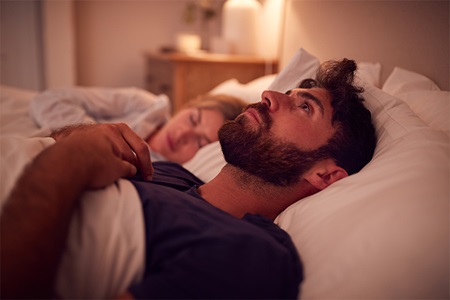
Millions of Americans (around 12% of the population, according to the American Academy of Sleep Medicine) will lay down to sleep tonight only to experience a few long hours of tossing and turning before finally falling into a fitful slumber that leaves them anything but well-rested.
If that sounds like your nightly “sleep” routine, then you may have a case of insomnia. Let’s explore this curious health topic and help you hit the hay – and stay there.
Common Causes of Insomnia
Many of us know the pain of not getting a good night’s of sleep: You’re groggy, irritable and can’t focus. For some of us, these are occasional occurrences. For others, stringing too many nights like this together could be a sign of insomnia.
Insomnia is defined by a persistent inability to fall asleep, stay asleep or get a good night of sleep. While most people experience short-term insomnia from time to time (usually due to temporary changes like high stress or significant life changes), you may have chronic insomnia if you struggle to sleep three nights every week for three months or more.
Sleep specialists use what’s called the “3P” model to identify underlying causes of insomnia in individual cases:
- Predisposing factors: Sleep disturbances are a common symptom of many medical conditions, and certain genetic factors can affect risk.
- Precipitating life events: Acute stress from significant life changes, like moving, starting a new job or having children, can make it difficult to get a good night’s sleep.
- Perpetuating behaviors: Consuming caffeine late in the day, using electronic devices too close to bedtime and other habits may come back to haunt you when you’re ready to close your eyes.
Sleep Disorders Beyond Insomnia
Insomnia is just one kind of sleep disorder; many people experience another type known as a parasomnia – a condition characterized by unusual activity while sleeping. While parasomnias are often treatable at home, they can be more complicated and may require additional medical intervention, which may include a combination of medication and therapy.
Common types of parasomnia include:
- Night terrors
- Nightmares
- Sleepwalking
- Bedwetting
- Sleep paralysis
Parasomnias can be triggered by many of the same causes of insomnia, including anxiety, depression, chronic sleeplessness and underlying medical conditions. Consider talking to your care team if you’re unable to treat parasomnia symptoms at home or if you have any concerning symptoms, like harming yourself or those around you.
Steps You Can Take for Better Sleep
While severe sleep conditions should be brought to your care team, most mild cases can be addressed at home.
Here are a few simple lifestyle adjustments you can start doing to set you up for a good night of sleep:
- Establish a consistent sleep routine: Turning in at a reasonable hour can help, but more important is going to bed and waking up at the same time every day. This conditions your brain and body to be sleep-ready when it’s time to start winding down.
- Avoid caffeinated beverages too close to bedtime: While individual responses to caffeine vary, it can take several hours for your body to metabolize your morning cup of joe. That means a late-afternoon coffee may still be keeping you bright-eyed when you really need shuteye.
- Don’t eat heavy meals right before bed: A heavy meal right before bed can turbocharge your digestive system and make it hard to fall and stay asleep. Aim to have your last bite of food at least two hours before bed (and avoid downing a big glass of your preferred drink, too).
- Maintain a morning routine: A good night of sleep starts the moment you wake up. Engaging in light activity in the morning can get your brain and body into a predictable rhythm. Walking, stretching, journaling or reading are all great morning activities to get your day started.
- Use supplementation as a sleep aid: Supplements (like melatonin and magnesium) and herbals (like lavender and chamomile) can act as calming agents that make it easier to fall asleep. While these can be helpful on a case-by-case basis, supporting research is not strong, and it is better to address the underlying problem directly.
Many cases of sleeplessness can be treated at home using the above lifestyle adjustments (and medication, if necessary). If you’ve tried at-home remedies and you’re still experiencing persistent sleep difficulty, treatments such as cognitive behavioral therapy for insomnia (CBT-I) may help. Consider reaching out to your primary care physician.
Share This Story



Manage Your Care Online
Use the MyBILHChart patient portal to schedule appointments, view test results, message your care team, and securely access your health records.

Newsletter Sign Up
Subscribe to our monthly Healthy Communities newsletter and get the latest health and wellness information delivered right to your inbox.
By providing your email address, you agree to receive emails from Beth Israel Lahey Health. You may unsubscribe at any time.